

🤳 The CEO Selfie: How to Spot Narcissism in Today's Business Leaders
The spotlight is shining brightly on narcissistic managers. Between high-profile CEO scandals and the public displays of extravagance by business icons, the potent mix of charisma and ego is taking center stage. For nearly two decades, researchers have been fascinated by these leaders. But how do you measure narcissism in a top executive when you can't exactly ask them to sit for a psychology test?
Management scholars have gotten clever, finding unobtrusive ways to identify narcissistic tendencies by simply observing behavior, language, and public presence.
🧐 The Challenge of Clinical Measurement
Narcissism, in a clinical sense, is defined by the Diagnostic and Statistical Manual of Mental Disorders (DSM) as a "pervasive pattern of grandiosity (sense of superiority in fantasy or behavior), need for admiration, and lack of empathy."
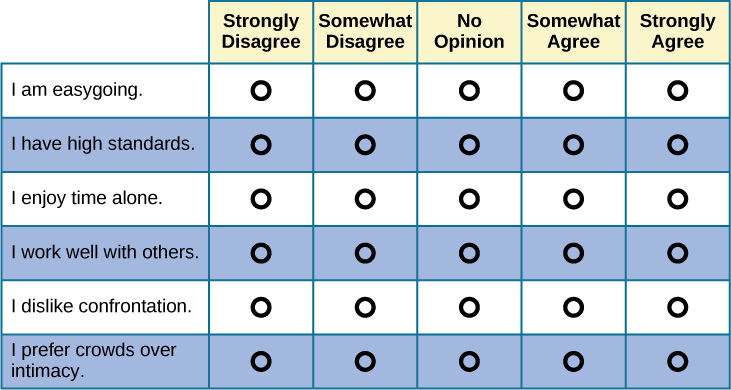
Traditionally, psychology uses self-report tests like the 40-item Narcissistic Personality Inventory (NPI), or its shorter NPI-16. These tests ask respondents to choose between paired statements, such as:
"I really like to be the center of attention" versus "it makes me uncomfortable to be the center of attention."
"I am much like everybody else" versus "I am an extraordinary person."
While a few studies have managed to administer the NPI to executives, access is rare. Researchers realized they had to get creative to study the most powerful people in business.
🎤 Looking for Clues in Communications
The search for alternative measures led researchers to analyze CEOs' official communications, identifying behavioral and linguistic cues that betray narcissistic tendencies.
In a landmark 2007 study, Arijit Chatterjee and Donald C. Hambrick identified four telltale signs of CEO narcissism in the public sphere:
📸 Photo Prominence: The size and frequency of the CEO's photograph in the company's annual report.
📰 Press Prominence: The CEO's visibility in company press releases.
🗣️ Pronoun Use: The heavy use of first-person singular pronouns (I, me, my) in interviews and communications.
💰 Pay Disparity: The CEO’s compensation divided by that of the second-highest paid executive.
Later research expanded these indicators to include things like the length of a CEO’s official biography, the number of awards listed, and even the ratio of singular (I) to plural (we) pronouns in official releases.
Fun Fact: Some researchers, inspired by psychology, have even used the size of a CEO's signature as a proxy for narcissism—the bigger and more flamboyant, the higher the suggested level of narcissism!
💻 The Social Media Window: LinkedIn as a Lab
The rise of social media has given researchers an unprecedented real-time opportunity to peer into the self-promotional world of executives.
A recent study by Sebastian Junge and colleagues analyzed managers' LinkedIn profiles to create a multi-dimensional index of narcissism, directly building on the DSM's definition. The authors flagged five features on a profile that may signal narcissistic tendencies:
Number of Pictures of the executive.
Length of the "About" section.
Number of listed professional experiences.
Number of listed skills.
Number of listed credentials.
By combining these indicators, researchers created an index that reliably correlated with both traditional NPI scores and the earlier unobtrusive measures. The takeaway? Even if LinkedIn itself encourages self-promotion, the extremes of self-presentation can reveal a great deal.
🎉 The Encouraging Takeaway
We don't always need a personality test to spot a narcissistic leader. The research is clear: their words, images, and online profiles reveal their tendencies.
These unobtrusive tools offer employees, investors, and board members a powerful way to recognize narcissistic leadership and adjust their decisions accordingly. And the potential for creative measurement is still huge—from analyzing psycholinguistic dictionaries for "narcissistic rhetoric" to studying more eccentric features like eyebrow distinctiveness!
Measuring Narcissism in Leaders
Methods, Validation, and Applications for Identifying Narcissistic Traits in Management
psychology Introduction
Narcissism in leadership presents unique challenges for organizations. While narcissistic individuals often pursue and attain leadership positions, their traits—characterized by grandiosity, need for admiration, and lack of empathy—can significantly impact organizational dynamics and performance. Measuring narcissism in leaders outside clinical settings requires innovative approaches, as traditional psychometric testing is rarely feasible with top executives.
assignment Traditional Self-Report Measures
check_circle Validated Tools
- Narcissistic Personality Inventory (NPI) - Most widely used, measures grandiosity, entitlement, and admiration-seeking
- NPI-16 and NPI-13 - Shorter versions focusing on leadership and exhibitionism
- Five-Factor Narcissism Inventory (FFNI) - Aligns with expert consensus on grandiose narcissism
- Narcissistic Admiration and Rivalry Questionnaire (NARQ) - Assesses admiration, rivalry, and entitlement
warning Limitations
- Vulnerable to social desirability bias
- Difficult to administer to top executives due to access constraints
- May conflate self-esteem with narcissism
- Only moderate correlations with clinical diagnoses
visibility Unobtrusive Measures for Current Leaders
trending_up CEO Narcissism Index (CNI)
- Prominence of CEO's photograph in annual reports
- CEO's prominence in company press releases
- Use of first-person singular pronouns in interviews
- CEO compensation relative to second-highest paid executive

fingerprint Other Indicators
- Signature size analysis
- Pronoun usage in communications
- Social media profile analysis
- Number of awards listed in self-descriptions
report_problem Validation Concerns
- Only moderate correlation with established measures like NPI
- Affected by external factors like company financial performance
- Questions about internal consistency and reliability
- May reflect different constructs rather than narcissism itself
record_voice_over Interview-Based Approaches for Selection
question_answer Narcissism Interview Scale for Employment (NISE)
Developed across four studies to assess narcissistic grandiosity during the hiring process. Uses two types of questions:
- Context-specific questions - Focus on work-specific tendencies rather than general life tendencies
- Behavioral/situational questions - Ask about past behaviors or hypothetical behaviors
Validation shows association with traditional survey assessments of narcissistic grandiosity and prediction of interpersonal aggression.
stars Advantages
- Overcomes limitations of self-report measures
- Perceived positively by applicants
- Context-specific questions yield stronger correlations with workplace outcomes
- Can be incorporated into standard interview processes
lightbulb Key Takeaways
Measuring narcissism in leaders requires a multi-method approach that considers the context and purpose of assessment. While traditional self-report measures offer strong validity, they face practical limitations with top executives. Unobtrusive measures provide valuable insights but require careful interpretation due to validation concerns. Interview-based approaches offer promising alternatives for selection contexts. Organizations should use these tools not to label leaders but to better understand personality dynamics and develop appropriate management strategies.